August 12, 2026
What to Actually Say to Your Groomer (and Why "Just a Trim" Backfires)
You booked the appointment, you said the words "just a tidy up, nothing drastic," and you collected a dog who either looks exactly the same or has been shaved to the skin. Almost nobody is at fault in that story. Grooming has its own vocabulary, most owners were never taught it, and "short" means something very different on either side of the counter. Here is how to ask for what you actually want.
"Just a trim" is not a length
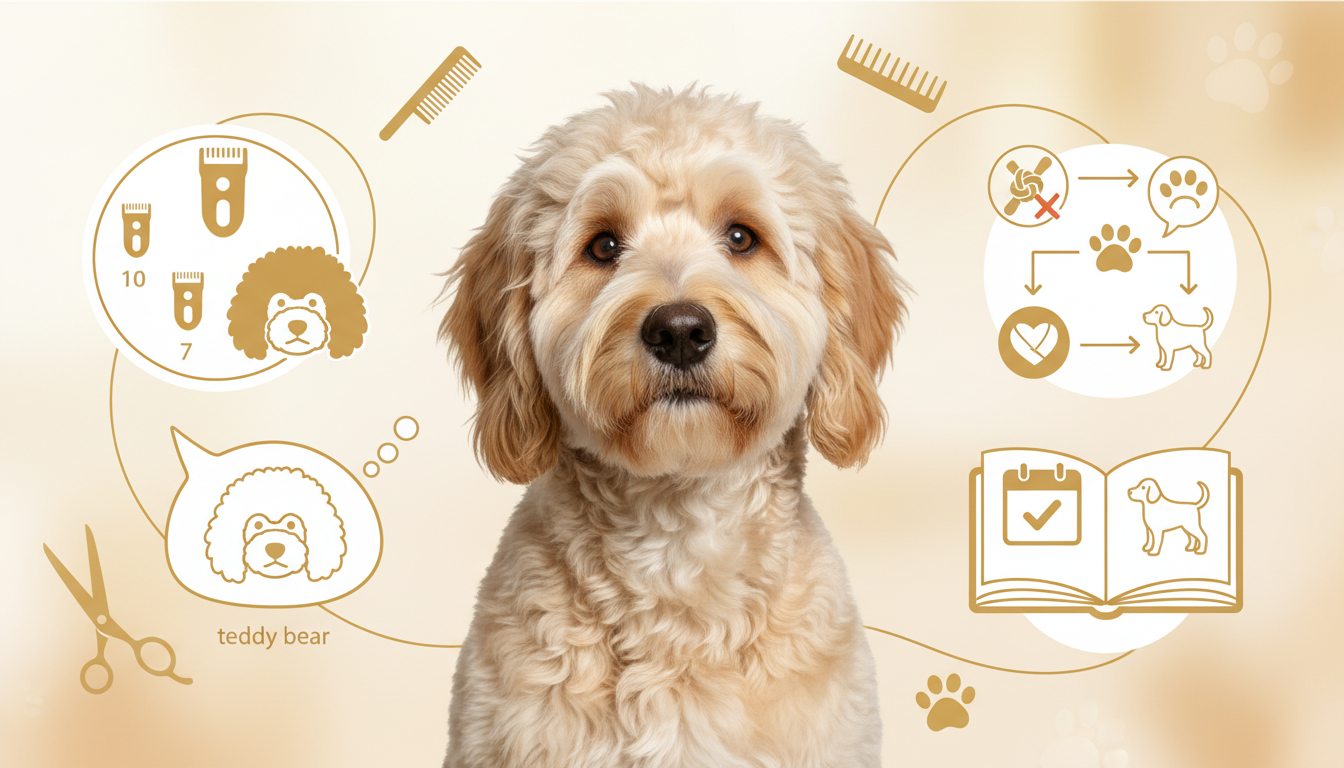
Give a number instead. Say how much hair you want LEFT: half an inch, one inch, two inches on the body. That single sentence removes most of the guesswork. It also helps to know that blade numbers run backwards from how they sound, so a number ten leaves far less coat than a number four. Guard combs go over the blade to leave more length, and they are what most fluffy doodle cuts are actually done with. If you are not sure, you do not need the jargon at all: how much to leave, in inches, is a complete instruction.
Bring a photo, and talk in body parts
Photos beat adjectives every time, and a photo of a similar coat type beats a photo of a groom you liked on a different kind of dog. Then go through the dog in sections, because a groom is really four or five separate decisions: body length, leg length, the head shape, the ears, and the tail. The famous teddy bear look is a HEAD shape, rounded face and ears blended in, rather than a whole haircut, which is why asking for "the teddy bear one" can still get you a body length you did not expect.
 A fresh teddy bear cut buys about a week of your dog looking like actual royalty, which is the joke behind the Sheepadoodle Royal Crest tee.
It is also worth saying out loud what the dog needs to live with. A dog who swims daily, runs through long grass or hates being brushed is not a candidate for a long fluffy coat, however lovely it looks on the day. A good groomer will tell you that. The honest version of this conversation gets you a cut that still looks decent in week five, which is the week that actually matters.
Tell the truth about the matting
Your groomer will find the mats whatever you say, usually in the armpits, behind the ears and under the harness. Saying so up front changes the plan rather than the price. If a coat is pelted, the humane answer is clippers underneath the mat, not an hour of dragging a brush through skin that is attached to it, and in many places the welfare guidance requires exactly that. A shave-down is not a failure or a punishment. It is a reset, the coat grows back, and the dog gets to be comfortable in the meantime.
- Brush the day before, not on the way out the door. A rushed brush leaves the tight spots and finds nothing.
- Walk the dog first. An empty, slightly tired dog stands far better on the table.
- Do not deliver a damp dog. It doubles the drying and tightens anything already tangled.
- Say if anything has changed. New lumps, sore ears, a bad reaction last time, a dog who now hates the dryer.
The face is its own conversation
More disagreements happen about the face than about the whole rest of the dog. Decide in advance whether you want the hair over the eyes taken back so your dog can see, whether the beard stays long or gets shortened so it stops dripping water across the kitchen, and whether the ears are blended into the head or left as separate flaps.
 Nobody wears a beard better than a Schnoodle, and nobody drips more water across a kitchen floor, both of which are on the Schnoodle Floral Face tee.
Beards are the part people regret asking to keep. A long beard on a soup-loving dog is a wet, staining, slightly smelly commitment, and shorter is not a betrayal of the look. Ask for the eyes to be cleared regardless. A dog who can see the world is a calmer dog on the lead, and it is the one change owners notice within a day.
Say the boring words too
Ears, sanitary trim, paw pads, nails. These are quick, they are usually included, and they are the ones people forget to mention and then miss. Ask what your groomer's approach to ear hair is, because opinion has genuinely shifted toward leaving it alone unless there is a problem, and it is worth knowing where yours stands rather than assuming.
Book the next one on your way out
The single most useful habit in doodle ownership is leaving with the next appointment already made, six to eight weeks out. Good groomers book up weeks ahead, and the gap between appointments is what decides whether the next visit is a haircut or a rescue. Turn up, be honest, tip if you can, and never send a matted dog in with a story about how they were fine yesterday. Groomers talk to each other, and the good ones are worth keeping.
If your dog is due back from the groomer looking briefly magnificent, the shop is organized by breed, so you can find your exact doodle, or your exact not-a-doodle, and dress for the four hundred photos you are about to take.
Never miss a post
New posts, new designs, and subscriber-only offers from Fluffy Doodle. No spam, unsubscribe anytime.