
August 16, 2026
Doodles and Kids: What Actually Matters More Than the Breed
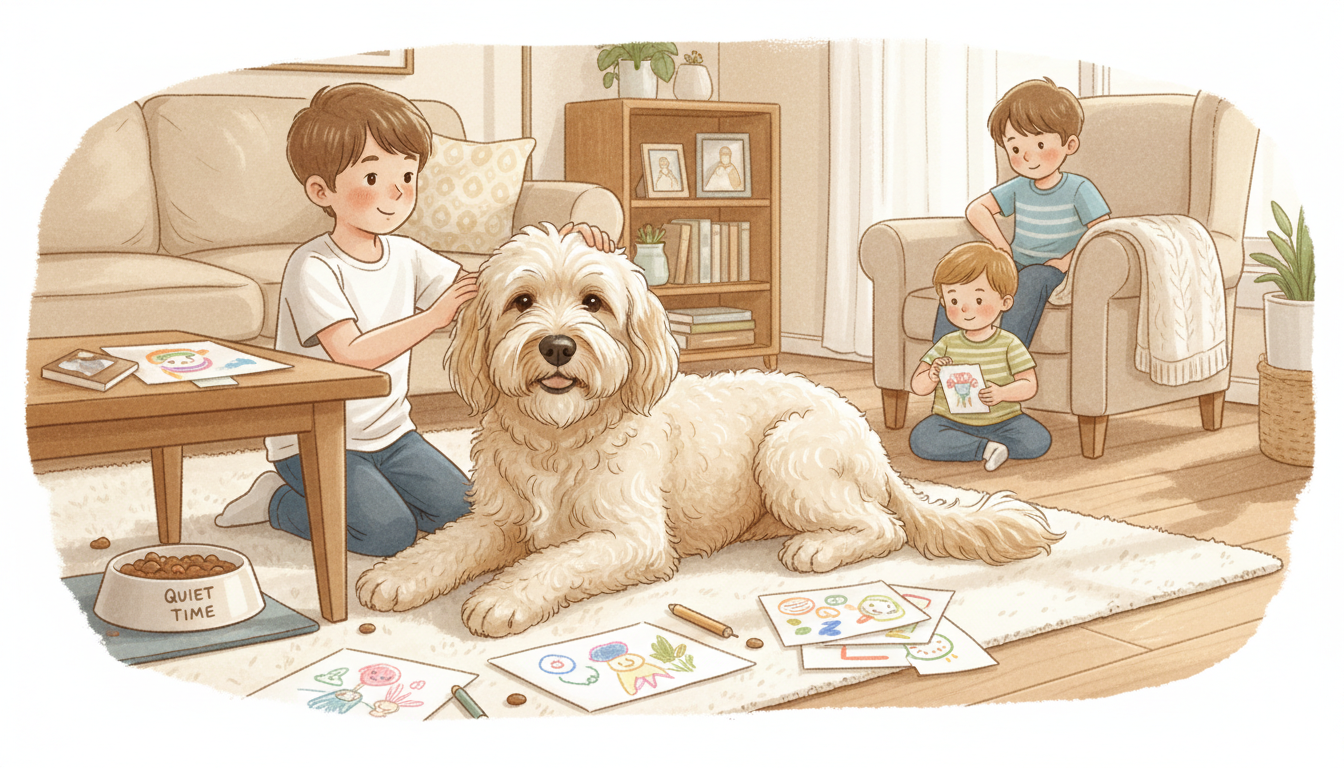
Doodles get chosen for families more than almost any other kind of dog, and the reputation is earned. Friendly, biddable, patient by the standards of dogs in general. It is also exactly the reputation that gets people into trouble, because "good with kids" quietly turns into "does not need watching," and that is the one substitution that causes almost every bite that happens in a house with a friendly family dog.
Temperament is not a substitute for supervision
Most bites at home do not come from an aggressive dog. They come from a perfectly nice dog who was startled, cornered, in pain, or simply done, with no adult close enough to step in before it happened. The research on this is blunt: active adult supervision, not the dog's personality, is the single biggest factor in whether a child and a dog have a good relationship. A friendly breed buys you a wider margin for error. It does not buy you the right to leave the room.
 The parent doing the actual watching, not just the dog getting the credit, is who the Cavapoo Mama tee is really for.
The rule that works in practice is simple to say and hard to keep: an adult within arm's reach whenever a young child and a dog are together, not in the next room, not half-watching a screen. As kids get older that distance can grow, but it should grow slowly and on the dog's behavior, not the calendar.
The food bowl is not a petting zoo
A dog eating, chewing a bone, or settled into a bed is a dog who has been told by every instinct they own that this is not the moment to be approached. Kids do not read that the way adults do, and a dog who has been crowded at the bowl enough times starts guarding it, which then gets labeled aggression when the actual problem was access. Teach a non-negotiable house rule early: nobody touches a dog who is eating, chewing, or sleeping, full stop, and reward the dog generously for calm proximity instead of testing it.
The signals kids never see coming
Dogs give a long runway of warning before a growl or a snap, and almost none of it is obvious to a seven year old. Learn to spot it yourself and narrate it out loud so your kids absorb the vocabulary too.
- The whale eye. Head turned away, whites of the eyes showing toward whoever is approaching. That is discomfort asking for space.
- The freeze. A dog gone suddenly still, stiff body, closed mouth. Far more urgent than a growl, and the one adults miss most often.
- Lip lick or yawn out of context. Mild stress, not boredom, if the dog is not tired.
- Moving away, repeatedly. A dog who keeps leaving the room is voting with their feet. Let them.
A dog who growls has actually done something helpful: they used their words. Never punish a growl itself, because that only teaches a dog to skip straight to the bite next time. Manage the situation that caused it instead.
Hugs are a human idea, not a dog one
Full-body hugs and face-to-face closeness read as loving to us and as restraint to most dogs. Teach kids to greet a dog side-on, let the dog come to them, and pet the chest or shoulder rather than reaching over the head. This one change prevents a large share of the "he just snapped out of nowhere" incidents, which almost always turn out to have a very clear before.
 The same goes for the household that decided a Goldendoodle would grow up alongside the kids, which is exactly the household the Golden Doodle Mom tee was made for.
Puppies and toddlers need separate management, not more of the same
An excited doodle puppy with needle teeth and a toddler at exactly nose height is not a smaller version of the dog-and-older-kid situation, it is a different job entirely. Use gates, pens and a house line so you can physically separate without a wrestling match, and give the puppy plenty of outlets so the only interaction on offer with the toddler is a calm one. Both of them are still learning the rules, and neither one benefits from being set up to fail while you are not looking.
Let your kids in on the job
Once the basics are solid, involving kids in real dog care builds something better than supervision ever will: genuine mutual trust. Filling the water bowl, helping with a gentle brush, holding a treat for a sit. Small, structured jobs teach a child to read a dog as a partner rather than a toy, and that habit is the thing that actually keeps everyone safe long after you have stopped watching every interaction.
The reputation, earned properly
Doodles really do make wonderful family dogs, and the households that get the best of that reputation are the ones who treat "friendly" as a good starting point rather than a finished job. Watch, teach, and let both the kids and the dog grow into the relationship together. If your family is somewhere in the middle of that right now, our shop is organized by breed, so you can find your exact doodle, or your exact not-a-doodle, and match the newest member of the family in a shirt.
Never miss a post
New posts, new designs, and subscriber-only offers from Fluffy Doodle. No spam, unsubscribe anytime.