August 25, 2026
Is Your Doodle a Healthy Weight? The Coat Is Hiding the Answer
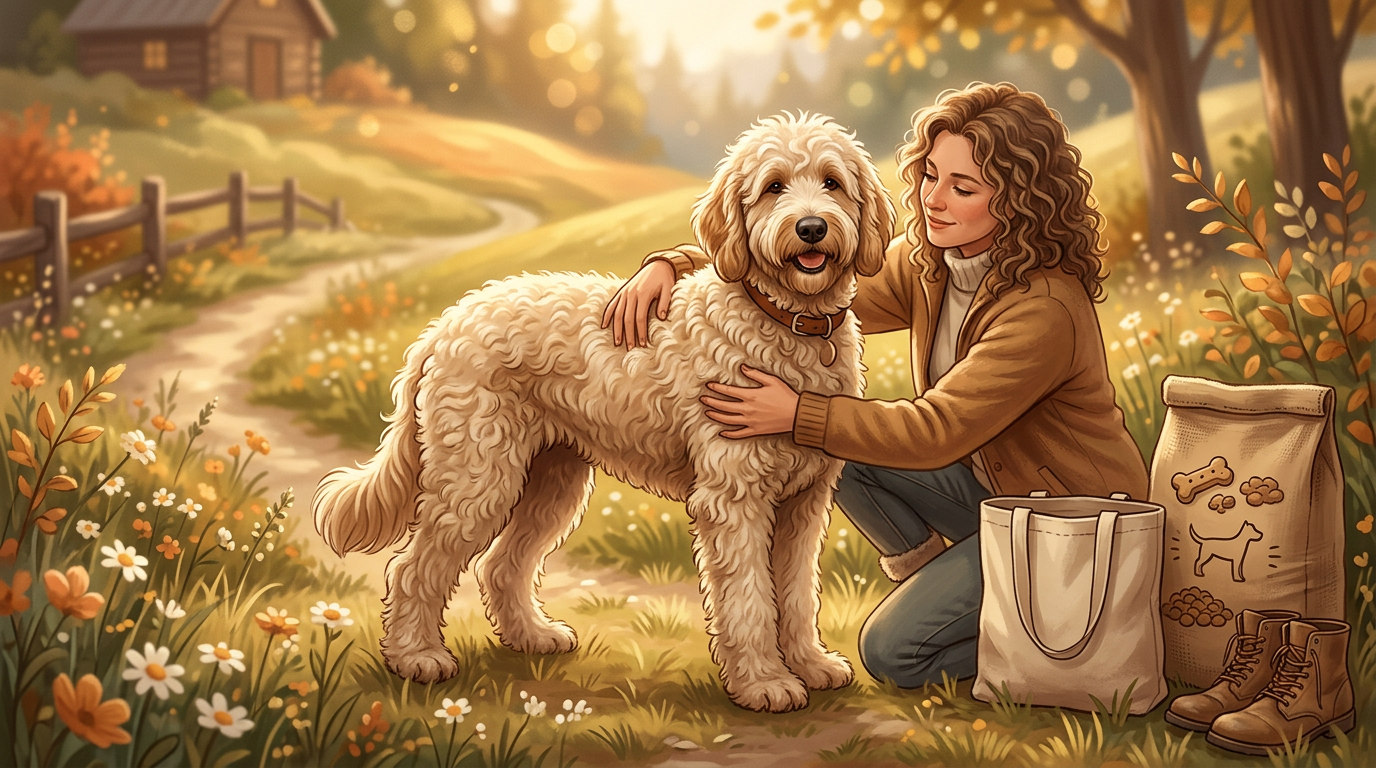
A doodle at a healthy weight and a doodle carrying a few extra pounds can look almost identical from across the room, because the same coat that hides a mat behind the ear or a tick in the armpit hides a thickening waist just as well. Vets see this constantly. Owners who would notice five pounds on themselves instantly do not notice it on a dog whose whole silhouette is fluff. It is worth learning the two checks that see past the coat, because extra weight is one of the most common and most preventable health problems in dogs this size.
The eyeball test does not work on a doodle
Body condition scoring, the system vets actually use, is built on feel, not sight, for exactly this reason. Run your hands along your dog's ribs with light pressure. You should be able to feel each rib clearly, roughly the way you feel the back of your own hand, without heavy pressure and without them being visible. If you have to press hard to find them, or if a flat plane of padding meets your palm before any rib does, that is weight to address.
 The dog doing the actual asking while you count kibble is basically the whole plot of the Coffee And Schnoodles tee.
The second check is the waist, viewed from above. Stand over your dog and look down. There should be a visible narrowing behind the ribs before the hips, an hourglass rather than a straight tube or, worse, a barrel that bulges outward. A heavy coat blurs this line more than owners expect, so run the same view again right after a bath when the fur is wet and flat. Most owners who try this for the first time are surprised by what they see.
The bag says less than you think
Feeding guidelines on a bag of dog food are calibrated for an average dog at that weight, doing an average amount of activity, and most real dogs are not average on both counts. A doodle who gets one long walk and spends the rest of the day on the couch needs less than the bag suggests. Treats compound the error further, since a lot of owners do not count them as food at all, and a handful of training treats through a session can add up to a genuine second meal. If you are treat training regularly, cut the regular meal down to make room for it rather than stacking both on top of each other.
- Weigh food, do not eyeball a scoop. A kitchen scale removes the single biggest source of overfeeding, and the difference between a level scoop and a generous one is bigger than it looks.
- Ask for a weight check at every vet visit. A trend over a year tells you far more than any single number.
- Watch the joints, not just the scale. Extra weight on a doodle's frame is extra load on hips and elbows that may already be working harder than a smaller dog's.
- Swap some kibble for vegetables in enrichment games. Green beans and carrot pieces work in a scatter feed or a puzzle toy just as well as kibble, for a fraction of the calories.
Why doodles specifically slide into this
Several things stack up against a doodle's waistline that do not apply equally to every breed. The coat itself hides the early signs from the owner who would otherwise catch it in week one rather than month six. The Poodle side of most mixes is genuinely food motivated and very good at asking. And the friendly, food-driven temperament that makes doodles such easy training subjects is the same trait that makes it easy to overdo the treats during a long training season, especially with a puppy.
 A dog who passes the rib check with room to spare has earned a portrait as good as the Cavapoo Floral Face tee.
Extra weight is not a cosmetic problem
The health cost is where this stops being a minor thing. Extra weight raises the risk of joint problems, especially in a dog whose frame is already working with hybrid hip and elbow conformation, shortens life expectancy on average, and makes heat far more dangerous in the same curly coat that already runs warm in summer. None of that shows up overnight. It shows up as a slow drift that a coat is perfectly built to hide, which is exactly why the hands-on check matters more than the mirror.
Small corrections work better than big ones
If the rib check or the waist check comes back concerning, the fix is rarely dramatic. A modest calorie cut, treats counted as part of the day's food rather than extra to it, and a bit more real exercise usually turns things around over a few months without anyone needing a crash diet. Weigh again in a month, not tomorrow, and let the trend do the talking.
Once you have done the check and your dog passes with flying colors, our shop is organized by breed, so you can find your exact doodle, or your exact not-a-doodle, and celebrate the good report with something new to wear on the next walk.
Never miss a post
New posts, new designs, and subscriber-only offers from Fluffy Doodle. No spam, unsubscribe anytime.