
August 19, 2026
Bringing Home Your First Doodle: What Week One Actually Looks Like
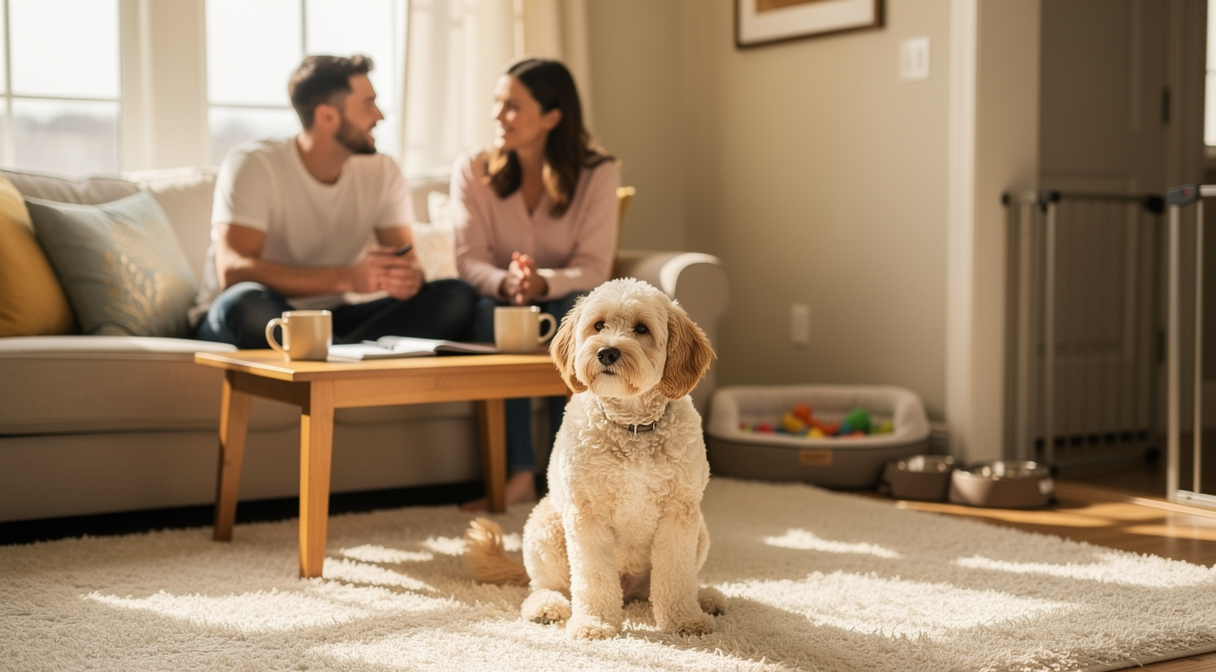
Somewhere between deciding you want a doodle and the actual drive home with one, there is a stretch of research, waiting, and mild panic that nobody quite prepares you for. The internet will give you a puppy-proofing checklist. What it usually skips is how to choose well in the first place, and what the first few days genuinely feel like once the excitement wears off around hour six. Here is the honest version.
A good source will interview you back
Whether you go through a breeder or a rescue, the relationship should feel two directional. A responsible breeder asks about your home, your experience, your plan for exercise and training, sometimes wants a home visit, and will happily show you health testing for the parents, especially hip and elbow screening in the bigger mixes. A shelter or rescue asks similar questions for a similar reason. Anyone who hands over a puppy with no questions asked, for cash, with no paperwork, is the sign to walk away, however sweet the puppy in front of you is. The interview feels slow in the moment and it is the single best predictor of a healthy dog and years without regret.
 The three in the morning coffee you will be making before the vet appointment is basically the origin story of the Coffee And Labradoodles tee.
Meet the parents if you can, or ask detailed questions about temperament if you cannot. A puppy raised underfoot in a family home, handled daily, already hearing vacuum cleaners and doorbells, arrives at your door a different animal to one raised in isolation. Early exposure is not a bonus feature, it is most of what makes a confident adult dog.
Puppy-proof lower and wider than you think
The standard list covers itself: cords, cleaning products, small objects a puppy can swallow, the trash. Go further than that. Doodle mixes are often tall enough by six months to reach a counter that seemed safely out of range in week one, so build habits now rather than relying on height. Block off rooms rather than trying to supervise the whole house at once, put anything chewable genuinely out of reach, and remember that a bored teething puppy will test table legs, baseboards and the corner of a rug with total commitment.
- A crate, set up before the puppy arrives. It becomes a safe den, not a punishment, if you introduce it calmly from day one.
- The same food the breeder or shelter was using. Switch slowly over a week if you want to change it, or expect a rough stomach.
- A vet appointment booked before pickup day. Aim for the first week, both for a health check and to start the vaccine schedule on time.
- One consistent set of house rules from day one. A puppy cannot tell the difference between "the couch is fine tonight" and "the couch is fine forever."
The first three nights are the hard part
Nobody quite believes this until they live it. A puppy who has just left the only home, smell and siblings they have ever known is allowed to grieve a little, and that often shows up as crying at night, not eating for a meal, or clinging to you during the day. Put the crate near your bed for the first week so your puppy is not newly alone in the dark on top of everything else, expect at least one middle-of-the-night bathroom trip, and resist the urge to solve the crying by taking the puppy into bed with you unless that is genuinely your long term plan. Consistency now is kinder than comfort now and confusion later.
 And for whichever parent ends up sleeping on the floor next to the crate that first night, the Goldendoodle Dad tee is basically a badge of honor.
Socialization has a closing window
The period between about eight and sixteen weeks is when a puppy forms their lasting sense of what is normal and safe, and it closes faster than most new owners expect. Before full vaccination is complete, that means carried outings rather than paws on the pavement: a friend's healthy, vaccinated dog, a car ride, being held while strangers say hello, new sounds and surfaces around the house. Ask your vet when it is safe to add public spaces and dog parks to the list. The goal in this window is volume and variety of calm, positive experience, not any one specific skill.
Do less training than you think, more often
Puppy brains are not built for long lessons. Five minutes, several times a day, on one thing at a time, beats a single half hour session that both of you find exhausting. Name recognition, sit, and a reliable "yes" or clicker sound to mark good choices will carry you further in week one than anything more advanced. Everything else can wait.
You are allowed to feel unsure
New puppy owners quietly assume everyone else finds this easier than they do. Almost nobody does. A wobbly, tired, slightly overwhelmed first week is completely normal, and it passes fast. Ask your breeder, shelter or vet questions without embarrassment, lean on other doodle owners, and remember that the dog who is currently keeping you up at three in the morning is also going to be the best part of most of your days for the next decade. When you are ready to celebrate surviving week one, our shop is organized by breed, so you can find your exact doodle, or your exact not-a-doodle, and wear the proof.
Never miss a post
New posts, new designs, and subscriber-only offers from Fluffy Doodle. No spam, unsubscribe anytime.